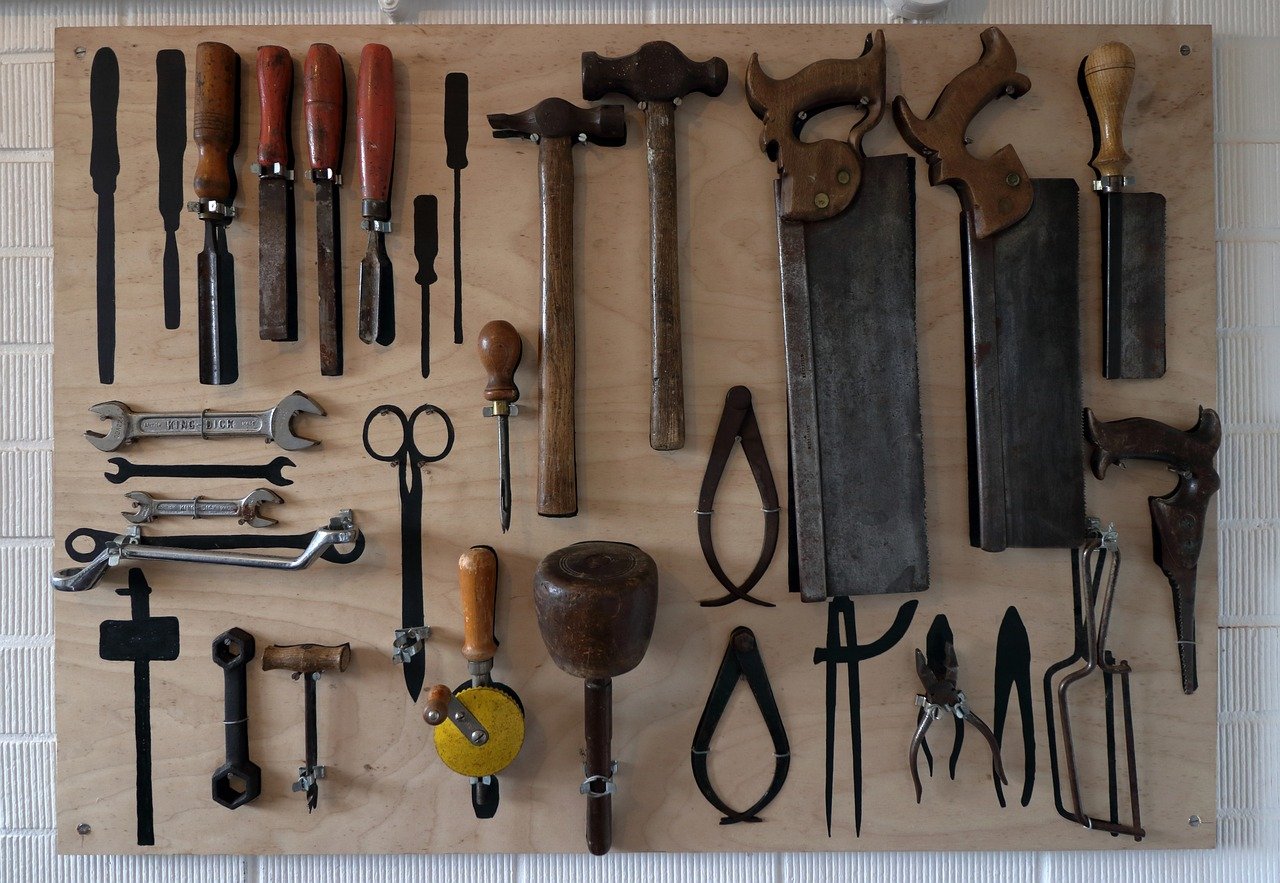
One of the first questions beginners ask is simple.
Should I start with hand tools or power tools?
Walk into any hardware store and you will see both. Hand saws sit next to circular saws. Manual screwdrivers sit next to cordless drills.
The right answer depends on your goals, budget, and comfort level.
Both hand tools and power tools can produce excellent results. The key is understanding their strengths and limitations.
What Are Hand Tools?
Hand tools are operated manually. They do not require electricity or batteries.
Common woodworking hand tools include:
- Handsaws
- Chisels
- Hand planes
- Screwdrivers
- Hammers
- Measuring tools
Hand tools rely on physical effort and control. They often move slower, but they allow precise adjustments.
What Are Power Tools?
Power tools use electricity or batteries to perform tasks more quickly.
Common beginner power tools include:
- Circular saw
- Drill
- Jigsaw
- Orbital sander
- Miter saw
Power tools reduce physical effort and increase speed. They are often preferred for cutting large boards or completing repetitive tasks.
Speed and Efficiency
One of the biggest differences between hand tools and power tools is speed.
Power tools complete tasks much faster.
For example:
- A circular saw can cut through a board in seconds.
- A handsaw may take several minutes.
If you are building larger projects or working with thick materials, power tools save time.
However, speed is not always the most important factor. For small projects, the slower pace of hand tools may be perfectly acceptable.
Control and Precision
Hand tools often provide greater control.
Because you are moving the tool by hand, you can feel resistance and adjust pressure immediately. This can improve accuracy for fine adjustments.
Power tools require steady handling. A fast-spinning blade leaves little room for hesitation.
For detailed work such as trimming or shaping small pieces, hand tools can offer better precision.
Cost Considerations
Hand tools are often less expensive at the beginning.
A basic handsaw, hammer, chisel, and screwdriver cost less than many power tools.
Power tools require a larger initial investment. In addition to the tool itself, you may need:
- Blades
- Drill bits
- Batteries
- Chargers
For beginners on a tight budget, starting with a few quality hand tools can be practical.
Over time, many woodworkers add power tools as projects become more complex.
Space Requirements
Power tools often require more space.
A table saw or miter saw needs a stable surface and room to operate safely.
Hand tools require less space and can be stored easily in a small toolbox.
If you are working in a small garage or apartment, hand tools may be more convenient at first.
Noise and Dust
Power tools create more noise and dust.
Saws and sanders can be loud. They may require hearing protection and proper ventilation.
Hand tools are quieter and produce less airborne dust.
If you are working in a shared space or near neighbors, this may be an important consideration.
Learning Curve
Hand tools help beginners understand the fundamentals of woodworking.
Using a handsaw teaches you how wood fibers respond to cutting. Using a hand plane teaches you how grain direction affects smoothness.
Power tools reduce physical effort but require attention to setup and safety.
Both types of tools require practice. Neither is automatically easier. The difference lies in how the skill develops.
Hand tools build patience and technique. Power tools build efficiency and consistency.
Safety Considerations
Safety matters regardless of tool type.
Power tools can cause injury quickly if handled incorrectly. Fast-moving blades and bits require focus and proper setup.
Hand tools can also cause injury if used carelessly. A slipping chisel or dull saw can lead to cuts.
Always wear eye protection. Secure materials properly. Follow instructions carefully.
Safety habits are more important than tool type.
When Hand Tools Make Sense
Hand tools may be a good choice if:
- You are building small projects
- You prefer a slower pace
- You are working in a limited space
- You want to learn foundational skills
- You are starting on a tight budget
Many woodworkers enjoy the quiet and control of hand tools.
For simple shelves, small boxes, or picture frames, hand tools may be enough.
When Power Tools Make Sense
Power tools may be a good choice if:
- You are building larger projects
- You need to make many repeated cuts
- You want to save time
- You are working with thicker hardwoods
For projects such as tables, cabinets, or large storage units, power tools can make the process faster and more consistent.
A Balanced Approach
Many experienced woodworkers use both.
They may cut large boards with a circular saw, then fine-tune edges with a hand plane.
They may drill pilot holes with a power drill but use a manual screwdriver for final tightening.
Starting with a balanced approach can be effective.
For example:
- Use a circular saw for main cuts
- Use hand tools for adjustments
- Use a drill for fastening
- Use sandpaper or a sander for finishing
This combination provides speed where needed and control where helpful.
What Should a Beginner Choose?
If you are starting from zero, a practical beginner setup could include:
- Tape measure
- Combination square
- Circular saw
- Drill
- A few clamps
- Sandpaper
You can add hand tools such as chisels or a hand plane as you grow more comfortable.
There is no single correct path. The best choice depends on your goals and working style.
All Tools Have Their Place
Hand tools and power tools both have value.
Hand tools offer control, lower cost, and quieter operation.
Power tools offer speed, efficiency, and convenience.
For most beginners, a mix of both provides the best experience.
Focus first on learning accurate measuring, safe cutting, and proper assembly.
Tools are important. Skill matters more.
Start with what you can manage. Build steadily. Improve with each project.
Over time, your workshop will reflect your experience.